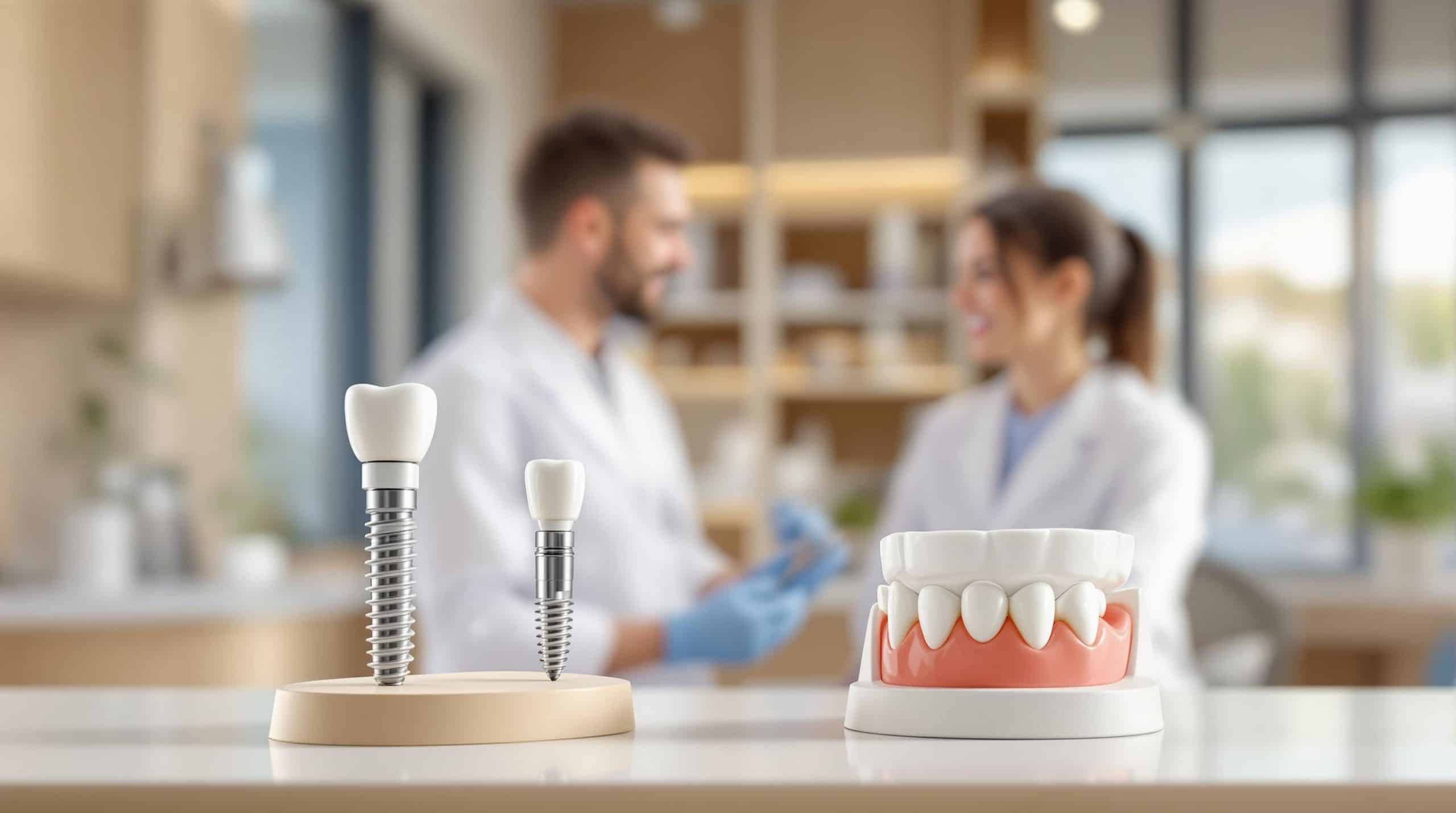
Missing teeth? You have two main options: dental implants or bridges. Here’s a quick breakdown to help you decide:
- Dental Implants: Surgically placed, durable, and preserve jawbone health. Costs $2,000–$6,000 per tooth but lasts longer (10–30 years). Requires enough bone density.
- Dental Bridges: Cost-effective ($300–$3,000 per tooth), quicker to install, but relies on neighboring teeth and may need replacement in 5–15 years. Doesn’t prevent bone loss.
Quick Comparison
| Feature | Dental Implants | Dental Bridges |
|---|---|---|
| Cost (per tooth) | $2,000–$6,000 | $300–$3,000 |
| Lifespan | 10–30 years | 5–15 years |
| Bone Health | Preserves jawbone | No effect |
| Procedure | Surgical | Non-surgical |
| Impact on Teeth | No effect on nearby teeth | Requires altering adjacent teeth |
| Maintenance | Easy to clean | Needs special cleaning tools |
Key Takeaway: Implants are better for long-term durability and bone health, while bridges are quicker and cheaper upfront. Consult your dentist to find the best fit for your needs.
Dental Implants and Bridges Explained
How Dental Implants Work
Dental implants are a widely used solution for replacing missing teeth. The procedure involves surgically placing a small titanium post into your jawbone. This post serves as an artificial root, creating a strong base for the replacement tooth. The implant consists of three main parts: the titanium post, an abutment that connects the post to the replacement tooth, and a custom crown designed to match your natural teeth.
Over time, a process called osseointegration occurs, where the jawbone grows around the implant, anchoring it securely in place.
Now, let’s look at how dental bridges offer another option.
How Dental Bridges Work
Dental bridges are another way to address gaps caused by missing teeth. Instead of replacing the tooth root, bridges rely on a system of crowns and an artificial tooth, called a pontic, to restore your smile. The pontic is positioned between two crowns that are attached to the healthy teeth on either side of the gap. These supporting teeth, known as abutment teeth, are carefully prepared to hold the crown anchors, which are cemented in place by a dentist.
Pontics can be made from materials like porcelain for a natural look, gold alloys for extra durability, or a mix of materials to balance strength and appearance.
Common Reasons for Tooth Replacement
Tooth replacement may be necessary due to severe decay, injury, advanced gum disease, or missing teeth from birth. Both dental implants and bridges are effective ways to restore functionality and improve your smile.
Life Expectancy and Strength
How Long Implants Last
Dental implants consist of a titanium post that bonds with the jawbone, creating a permanent foundation. While the implant itself is designed to last a lifetime, the crown – which faces regular wear and tear – usually needs replacement every 10–15 years. This gives the overall system a lifespan of 10–30 years.
How Long Bridges Last
Dental bridges generally don’t last as long as implants. Traditional bridges typically last 10–15 years, while cantilever bridges have a shorter lifespan, averaging 5–10 years.
| Bridge Type | Average Lifespan |
|---|---|
| Traditional Bridge | 10–15 years |
| Cantilever Bridge | 5–10 years |
What Affects Their Lifespan
Several factors can influence the longevity of dental restorations:
- Oral hygiene: Consistent brushing, flossing, and professional cleanings are essential. Poor oral hygiene can lead to gum disease, which may compromise implants.
- Chewing forces: Restorations at the back of the mouth endure more pressure, which can reduce their lifespan.
- Smoking: Smoking restricts blood flow to the gums, slowing healing and negatively impacting implants.
- Health conditions: Issues like diabetes can lower the success rate of restorations.
Regular dental visits are crucial for identifying and addressing potential problems early. Understanding these factors can help you decide which tooth replacement option aligns best with your needs.
Pricing and Payment Options
Implant Costs
In Austin, the price for a single dental implant generally falls between $3,000 and $4,500. This typically includes the implant placement, abutment, and custom crown. However, additional procedures like bone grafts or advanced imaging may raise the total cost.
For full-arch restorations, the cost depends on the materials used:
- All-on-4 dental implants: $23,508 per arch
- Snap-in dentures: $15,333 per arch
- Zirconia full arch implants: $31,250 per arch
Bridge Costs
Traditional dental bridges are often less expensive upfront. A 3-tooth bridge in Austin typically costs between $2,516 and $5,636, with an average of $3,699. The final price varies based on factors like the material, the number of teeth being replaced, placement complexity, and any additional procedures required.
Payment and Insurance Coverage
Costs can feel more manageable with the right payment methods and insurance. While many dental insurance plans cover 50–80% of bridge costs, coverage for implants varies widely. It’s important to check your insurance benefits and confirm any pre-authorization requirements before starting treatment.
Here are some payment options to consider:
- Insurance and FSA/HSA: Dental implants or bridges may qualify for reimbursement through FSA or HSA accounts, reducing out-of-pocket expenses.
- Financing Plans: Many dental offices partner with third-party financing companies, offering options like 0% interest for qualified patients or fixed monthly payments.
- Special Offers: Shoal Creek Smile Studio is currently offering a $250 discount on implant placement during select months.
sbb-itb-fb98d5c
Effects on Dental Health
Implants and Bone Health
Dental implants play a key role in preserving jawbone structure. Losing a tooth can lead to a 30% decrease in bone mass within the first year. Unlike bridges, implants act as artificial roots, stimulating bone growth and preventing further loss. The titanium post of an implant fuses with the jawbone, encouraging new bone development. This integration helps maintain facial structure and prevents the sunken appearance often associated with prolonged tooth loss.
Bridges and Adjacent Teeth
Traditional dental bridges require altering nearby teeth. Dr. Michael Spektor and Dr. Wendy Spektor explain:
"A dental implant is actually a root replacement, and unlike the root of a tooth, it is actually fused to the bone of the jaw. A crown is attached to the implant and in effect it becomes a stand-alone tooth, functioning and appearing just like the natural tooth you have lost."
Bridges, on the other hand, involve:
- Modifying adjacent teeth, including enamel removal and crown placement
- Possible root canal treatment if the nerves are affected
Altering healthy teeth can lead to increased sensitivity and a higher likelihood of future dental procedures. If issues arise with the supporting teeth, the entire bridge often needs to be replaced. These differences in procedure significantly influence long-term dental health.
Long-term Health Effects
The design and procedure differences between implants and bridges create notable long-term effects on oral health. Dr. Anne Clemons, DMD, highlights:
"A bridge can be a pain to clean. Normally, a person can floss between each tooth. But with a bridge, you have three teeth connected, and no way to get between them. There are special flosses and tools for getting beneath a bridge, but it’s another step in your daily routine, and just a little bit more annoying."
Key differences in long-term outcomes include:
| Aspect | Dental Implants | Dental Bridges |
|---|---|---|
| Longevity | Can last a lifetime (crown ~15 years) | May need replacement after 5–7 years |
| Bone Health | Maintains jawbone structure | Does not prevent bone loss |
| Maintenance | Easier to clean and maintain | Requires special cleaning tools |
| Risk Factors | Surgical risks like infection | Decay risk in supporting teeth |
While implants involve a more invasive initial procedure, they tend to provide better long-term results, preserving bone health and reducing strain on neighboring teeth.
Making Your Choice
Key Decision Points
When deciding between dental implants and bridges, several factors come into play. Your oral health and specific dental needs are crucial in determining the right choice. Here’s a quick breakdown of important considerations:
| Factor | How It Affects Your Choice |
|---|---|
| Jawbone Density | Implants need enough bone density, while bridges depend less on bone quality. |
| Adjacent Teeth | Bridges rely on healthy neighboring teeth for support; implants don’t require this. |
| Missing Teeth | A single missing tooth often suits an implant, but multiple consecutive gaps may lean toward a bridge. |
| Treatment Timeline | Bridges are typically quicker to complete, while implants involve surgery and a longer recovery. |
| Budget Range | Bridges usually cost less upfront, while implants require a higher initial expense. |
These factors help determine which option aligns with your needs. Now, let’s dive deeper into when implants or bridges might be the better choice.
Best Cases for Implants
Dental implants are a great fit if:
- You have enough bone density to support the implant.
- Only one tooth is missing, and the surrounding teeth are healthy.
- You’re prepared for a higher upfront cost, typically $3,000–$4,500 per tooth.
- Long-term durability and maintaining bone health are important to you.
- You’re looking for a solution with a 97% success rate over 10 years.
"Dental implants are the best tooth replacement method."
Best Cases for Bridges
Bridges might be the better option if:
- You have several adjacent missing teeth.
- A lower upfront cost (around $300–$3,000 per tooth) is a priority.
- You want a faster treatment process.
- The neighboring teeth already need crowns for other reasons.
- Surgery isn’t ideal due to health concerns.
Your choice depends on your oral health, bone structure, and budget. It’s always best to consult with your dentist to find the most suitable option for you.
Dental Implants vs Bridges for Missing Teeth (3D-Animation)
Next Steps
Explore your options and take the first step toward better dental health.
At Shoal Creek Smile Studio, Drs. John and Lori Babineau provide thorough evaluations to help determine the best restoration plan for you. During your consultation, here’s what you can expect:
| Assessment Area | What to Expect |
|---|---|
| Oral Examination | Digital X-rays and intraoral camera imaging to assess bone density and oral health. |
| Treatment Planning | A discussion covering the timeline, costs, and expected results. |
| Financial Review | Review of payment options and insurance coverage. |
| Health Assessment | Consideration of your medical history and lifestyle factors. |
With this personalized evaluation, taking the next step is straightforward:
- Call 512-459-7811 to schedule your consultation.
- Visit their office at 5017 Bull Creek Rd, Austin, TX 78731.
- Use the "Schedule Now" button on their website.
Office hours are:
Monday: 9 AM–2 PM
Tuesday–Wednesday: 8 AM–4 PM
Thursday: 9 AM–5 PM
Friday: 9 AM–2 PM
Ask about flexible financing and insurance options during your visit.