
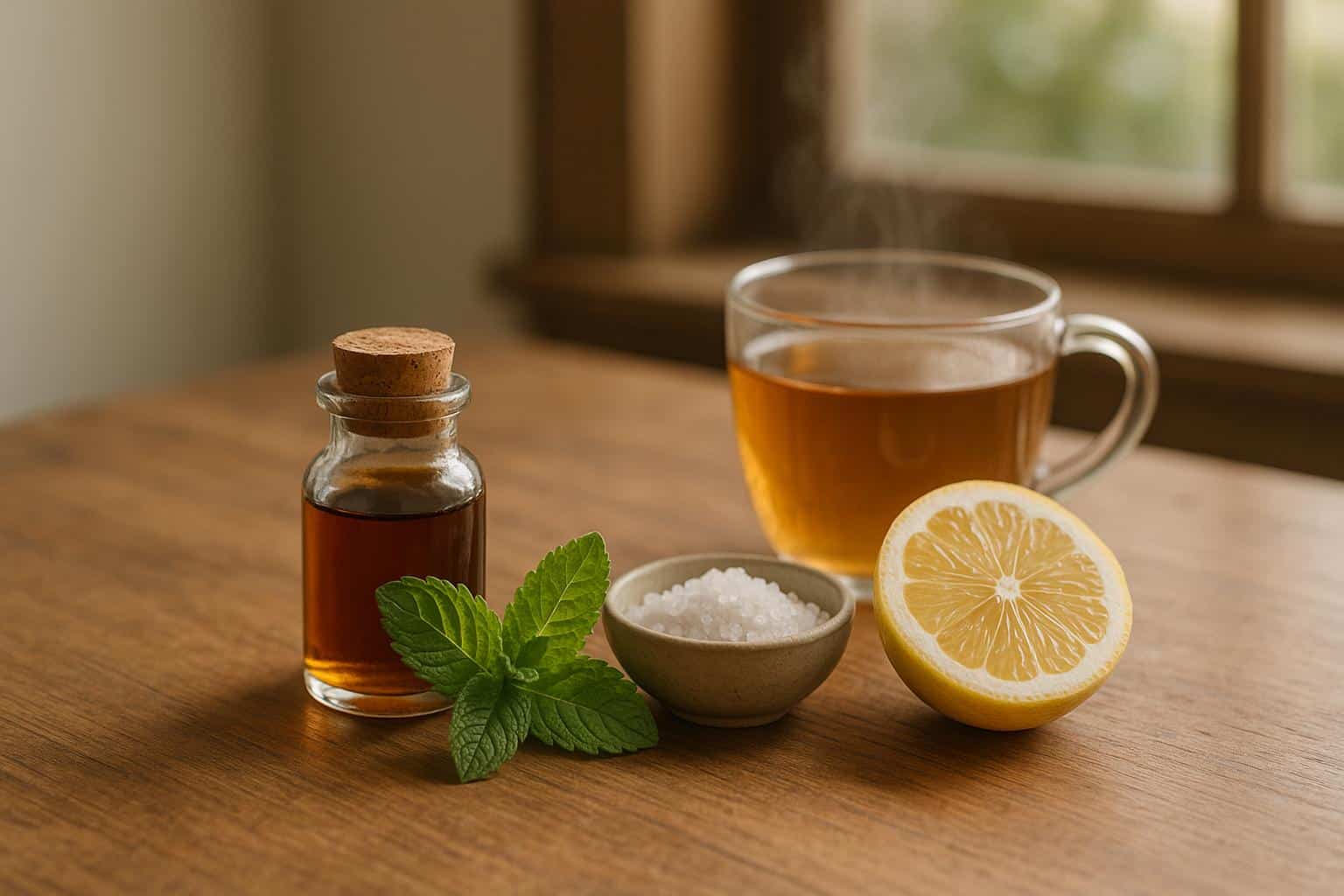
Toothaches can disrupt your day, but natural remedies might offer quick, temporary relief. Here are 10 simple options to try at home before visiting a dentist:
- Salt Water Rinse: Reduces bacteria and inflammation. Mix 1/2 tsp salt in a cup of warm water and swish for 30 seconds.
- Clove Oil: A natural pain reliever. Dilute with a carrier oil and apply with a cotton ball.
- Ice Pack: Reduces swelling and numbs pain. Apply for 15-20 minutes on the cheek near the affected area.
- Garlic: Crush into a paste, optionally add salt, and apply to the painful tooth.
- Hydrogen Peroxide: Dilute 3% hydrogen peroxide with equal water, swish for 30-60 seconds, then rinse.
- Peppermint Tea Compress: Cool a brewed tea bag and place it on the affected area.
- Vanilla Extract: Dab pure vanilla extract on the tooth for mild numbing.
- Guava Leaves: Chew fresh leaves or use as a rinse after boiling.
- Thyme Oil: Dilute with a carrier oil and apply to the area or use as a rinse.
- Wheatgrass Juice: Swish fresh juice to reduce bacteria and inflammation.
Quick Comparison Table:
| Remedy | Pain Relief | Prep Time | Key Benefit | Safety Notes |
|---|---|---|---|---|
| Salt Water Rinse | Mild | 1-2 min | Reduces bacteria/inflammation | Avoid overuse; don’t swallow |
| Clove Oil | Strong | 2-3 min | Natural anesthetic | Must dilute; avoid direct gum contact |
| Ice Pack | Moderate | ~1 min | Reduces swelling | No direct skin contact |
| Garlic | Moderate | 2-3 min | Antimicrobial, anti-inflammatory | Test for sensitivity |
| Hydrogen Peroxide | Moderate | 2-3 min | Kills bacteria | Dilute; don’t swallow |
| Peppermint Tea | Mild | 5-10 min | Cooling, soothing | Cool completely before use |
| Vanilla Extract | Mild | ~1 min | Quick numbing | Use pure extract only |
| Guava Leaves | Moderate | 5-10 min | Antiseptic, anti-inflammatory | Use fresh leaves |
| Thyme Oil | Moderate | 2-3 min | Antibacterial, pain relief | Must dilute; test sensitivity |
| Wheatgrass Juice | Mild | 5-10 min | Antibacterial, nutrient-rich | Use fresh; swish only |
These remedies are not a substitute for professional care. If pain persists beyond 24-48 hours, worsens, or is accompanied by fever or swelling, see a dentist immediately. For those in Austin, TX, Shoal Creek Smile Studio offers emergency dental services to address the root cause of your discomfort.
1. Salt Water Rinse
Pain Relief Results
A salt water rinse is one of the easiest ways to ease a toothache. By creating an alkaline environment in your mouth, it slows down the growth of harmful bacteria and helps reduce swelling and inflammation. While it’s not a permanent fix, it can provide quick, temporary relief until you can see a dentist.
How to Prepare and Use
Here’s how to make and use a salt water rinse:
- Combine 1/2 teaspoon of salt with 8 ounces (1 cup) of warm water.
- Stir the mixture until the salt dissolves completely.
- Swish the solution in your mouth for about 30 seconds, focusing on the area causing discomfort.
- Spit it out – don’t swallow the solution.
- Repeat this process 2–3 times a day, as needed.
Using warm water is key, as it’s gentle on irritated tissues. You can repeat this every few hours to manage pain until you get professional help.
Safety Considerations
Salt water rinses are generally safe, but there are a few things to keep in mind:
- Stick to 2–3 uses per day to avoid drying out your mouth or irritating sensitive tissues.
- If you have high blood pressure or are on a low-sodium diet, check with your doctor before using this remedy regularly.
- Make sure children are supervised to prevent accidental swallowing of the solution.
- If the pain lasts longer than 48 hours or you notice swelling or fever, contact a dentist immediately.
This simple remedy can bring relief, but it’s no substitute for professional care when needed.
2. Clove Oil Treatment
Pain Relief Results
Clove oil is a well-known natural option for easing toothache pain. Its key ingredient, eugenol, works as both a pain reliever and an antiseptic. Many users report feeling relief within minutes of applying it, with the numbing effect lasting for several hours. Beyond numbing, it helps reduce inflammation and fights bacteria, offering short-term comfort until you can see a dentist. Let’s look at how to prepare and apply clove oil effectively.
How to Prepare and Use
The National Association of Holistic Aromatherapy suggests diluting clove oil with a carrier oil to ensure safe use. Here’s how you can do it:
- Mix the solution: Combine 15 drops of clove oil with 1 ounce of carrier oil, such as sunflower or jojoba oil.
- Apply it: Soak a clean cotton ball in the diluted mixture.
- Use on the affected area: Place the soaked cotton ball on the painful spot and leave it there for a few minutes.
- Repeat as needed: You can apply this up to three times a day for relief.
Another option is to add 2–3 drops of the diluted clove oil to 1/4 cup of warm water. Swish the mixture in your mouth and spit it out.
Safety Considerations
Never apply undiluted clove oil directly to your gums or teeth – it can cause irritation or burning. If you notice any discomfort, stop using it immediately. Those with allergies to clove or eugenol, or anyone with specific health conditions, should consult a healthcare professional before trying clove oil.
"While clove oil can provide temporary relief, it does not address the underlying cause of tooth pain", advises the National Association of Holistic Aromatherapy.
If the pain lasts more than 48 hours or is accompanied by fever or swelling, it’s time to seek professional dental care. For anyone in the Austin, TX area, Shoal Creek Smile Studio offers emergency dental services to address these issues promptly.
3. Ice Pack Application
Pain Relief Results
Using an ice pack can provide relief by employing cold therapy to reduce blood flow and inflammation. This happens because the cold causes blood vessels to constrict, which helps ease swelling and pain. Typically, you can expect pain to subside within 15–20 minutes of application. This approach is particularly useful for dental pain resulting from trauma or injury, where swelling is a key issue.
How to Prepare and Use
Here’s how to prepare and apply a cold compress:
- Wrap a few ice cubes in a clean, thin towel, or grab a commercial cold pack.
- Gently press the wrapped ice pack against the outside of your cheek, close to the area of the painful tooth.
- Keep it in place for 15–20 minutes.
- Take a 20-minute break before reapplying to avoid skin irritation.
Stick to these steps, and be sure to review the safety tips below before reapplying.
Safety Considerations
When using an ice pack, keep these precautions in mind:
- Never place ice directly on your skin or gums, as this can cause frostbite or tissue damage.
Stop using the ice pack immediately if you experience any of the following:
- Excessive redness on the skin
- Numbness or tingling
- Blistering
- Worsening pain or swelling
If you’re in Austin, TX, and your tooth pain persists for more than 48 hours, consider reaching out to Shoal Creek Smile Studio. They provide emergency dental services to address the root cause of your discomfort. Remember, while ice packs can help with temporary relief, they won’t resolve the underlying issue causing your dental pain.
4. Garlic Treatment
Pain Relief Results
Garlic contains a compound called allicin, which can temporarily ease tooth pain by numbing pain receptors, reducing inflammation, and fighting bacteria. Many people report feeling relief within 15–30 minutes of application, with effects lasting for several hours. However, like most natural remedies, garlic offers only short-term relief. If the pain persists, it’s important to consult a dental professional.
How to Prepare and Use
Here’s how you can use garlic to address tooth pain:
- Peel a fresh garlic clove.
- Crush it into a paste.
- Optionally, add a small pinch of salt to the paste.
- Apply the mixture directly to the painful tooth and surrounding gums.
- Leave it on for 10–15 minutes.
- Rinse your mouth thoroughly with warm water.
If your gums are sensitive, a gentler option might work better. Warm crushed garlic in olive oil for about 20 minutes, strain the mixture, and then apply the garlic-infused oil to the affected area.
Safety Considerations
While garlic can help manage symptoms temporarily, there are important safety tips to keep in mind:
- Limit use to 1–2 days and consult a dentist if the pain persists.
- Stop immediately if you notice any allergic reaction.
- If you’re on blood-thinning medication, check with your healthcare provider before using garlic.
- Avoid applying garlic directly to open sores or wounds in your mouth.
Seek urgent dental care if you experience any of the following:
- Swelling in the face or jaw.
- A fever accompanying the tooth pain.
- Severe pain that disrupts daily life.
- Noticeable damage to the tooth or trauma.
- Bleeding from the affected area.
5. Diluted Hydrogen Peroxide
Pain Relief Results
Diluted hydrogen peroxide offers a temporary way to ease toothache discomfort by targeting bacteria in the mouth. A 3% hydrogen peroxide rinse can reduce oral bacteria by up to 90%. Its bubbling action helps clear debris from the affected area and may lower inflammation, though it doesn’t directly numb the pain. Relief often begins within minutes, but it’s important to note that this method primarily addresses bacterial issues, not the pain itself. Below are steps to safely prepare and use this rinse.
How to Prepare and Use
Here’s how to create a hydrogen peroxide rinse:
- Mix equal parts of 3% hydrogen peroxide and water (e.g., 1 tablespoon of each).
- Swish the solution around the affected area for 30–60 seconds to activate its antibacterial properties.
- Spit out the mixture and rinse your mouth thoroughly with plain water.
Safety Considerations
When using diluted hydrogen peroxide, keep these precautions in mind:
| Warning Signs to Stop Use | Safe Usage Guidelines |
|---|---|
| Burning sensation in gums | Use only a 3% solution diluted with equal parts water |
| Increased tooth sensitivity | Limit use to 3–5 consecutive days |
| Persistent irritation | Do not swallow the solution |
| Unusual taste or numbness in the mouth | Store in its original dark bottle |
This remedy is not suitable for children under 12, individuals with open wounds in the mouth, those with severe gum disease, or anyone with dental restorations that could be affected. Pregnant or nursing individuals should also avoid this treatment.
While diluted hydrogen peroxide can help control bacteria and ease discomfort temporarily, it’s not a replacement for professional dental care. If your toothache lasts more than 48 hours or is accompanied by swelling, fever, or severe pain, contact a dental professional. For those in Austin, TX, Shoal Creek Smile Studio provides a range of dental services to address your needs.
6. Peppermint Tea Compress
Pain Relief Results
Peppermint tea compresses can provide soothing relief for toothaches, thanks to menthol’s cooling properties. Menthol works as a mild anesthetic, creating a cooling sensation that may help ease pain and reduce inflammation. While this method can offer temporary comfort, it’s not a substitute for professional dental treatment.
How to Prepare and Use
Here’s how you can make and use a peppermint tea compress:
- Steep the Tea Bag
Brew a peppermint tea bag in 8 oz of hot water for about 2–3 minutes, then remove it. - Cool the Tea Bag
Let the tea bag cool to a comfortable temperature by testing it on your wrist. - Apply to the Affected Area
Place the cooled tea bag on the painful area for 10–15 minutes. For added relief, you can chill the tea bag in the freezer for a few minutes before reapplying.
Safety Considerations
Peppermint tea compresses are generally safe for most people, but there are some precautions to keep in mind:
- Avoid using if you’re allergic to mint or menthol.
- Skip this remedy if you have sensitive gums, open sores in your mouth, or oral tissues prone to irritation.
- Not recommended for children under 6 years old.
If you notice burning, irritation, or increased sensitivity, stop using the compress immediately. Remember, this is a temporary solution and won’t address the root cause of your tooth pain. If discomfort continues, seek help from a dentist. For those in Austin, TX, Shoal Creek Smile Studio offers comprehensive dental care to help resolve your concerns.
7. Pure Vanilla Extract
Pain Relief Results
Pure vanilla extract can offer temporary relief for tooth pain. Its alcohol content provides a mild numbing effect, while the antioxidants may help support the healing process. While this remedy isn’t a long-term solution, it can provide quick, short-lived comfort.
How to Prepare and Use
Here’s how you can use vanilla extract to ease tooth pain:
- Make sure to use pure, natural vanilla extract – avoid artificial substitutes.
- Add a few drops to a clean fingertip or a small cotton ball.
- Gently apply the extract to the aching tooth and the surrounding gums. You can repeat this process as needed throughout the day.
Safety Considerations
Keep these precautions in mind when using vanilla extract:
- The alcohol content makes this unsuitable for children and limits its use to short-term relief.
- Avoid using it if you’re sensitive to vanilla or alcohol.
- Stop immediately if you notice any irritation.
If you’re in Austin and dealing with persistent tooth pain, consider visiting Shoal Creek Smile Studio. Their dental services can help identify and treat the root cause of your discomfort.
sbb-itb-fb98d5c
8. Guava Leaves
Pain Relief Results
Guava leaves are known for their natural ability to ease discomfort, thanks to compounds like flavonoids and tannins. These substances help reduce inflammation in dental tissues, combat bacteria that can lead to infections, and provide a soothing, pain-relieving effect. Many people report feeling relief within 15–30 minutes, which can last for 1–3 hours. When used consistently over 1–2 days, the anti-inflammatory effects become more noticeable, making it a helpful option for mild to moderate tooth pain.
How to Prepare and Use
Guava leaves can be used in two main ways: as a rinse or through direct application.
- To make a rinse:
- Crush 4–5 guava leaves.
- Boil the crushed leaves in 2 cups of water for about 5 minutes.
- Let the mixture cool until it reaches a comfortable temperature.
- Use it as a mouth rinse 3–4 times a day.
- For quick relief: Chew fresh guava leaves to release their natural juices, which can help soothe the affected area directly.
Safety Considerations
Although guava leaves are generally safe to use, it’s important to follow these precautions:
- Wash thoroughly: Clean the leaves well to remove any dirt or bacteria.
- Check for allergies: If you’re sensitive to plants in the Myrtaceae family, avoid using guava leaves.
- Health conditions: If you have diabetes, consult your doctor first, as guava leaves may influence blood sugar levels.
- Short-term use: This remedy should be seen as a temporary measure while you seek professional dental care.
If you’re in Austin and dealing with persistent pain, reach out to Shoal Creek Smile Studio for a comprehensive evaluation.
9. Thyme Oil
Pain Relief Results
Thyme oil, extracted from the herb Thymus vulgaris, contains thymol, a compound known for its antibacterial and anti-inflammatory properties. Research from the Journal of Medicinal Food has shown that thyme oil has strong antimicrobial effects, particularly against oral pathogens like Streptococcus mutans, a major contributor to tooth decay. When diluted, thyme oil can offer temporary relief from toothache discomfort.
Here’s what makes thyme oil helpful:
- Pain relief: It provides a mild numbing sensation that can ease discomfort.
- Fights bacteria: Its antimicrobial properties target bacteria that may worsen tooth decay.
- Reduces inflammation: Its anti-inflammatory effects help minimize swelling in the affected area.
How to Prepare and Use
To use thyme oil safely and effectively, it’s important to dilute it properly. Follow these steps:
- Prepare the mixture: Combine 2–3 drops of thyme essential oil with 1 tablespoon of a carrier oil, like coconut or olive oil.
- Ways to apply:
- Direct application: Soak a clean cotton ball in the diluted oil and place it on the painful area. Leave it there for 5–10 minutes.
- Mouth rinse: Mix 1–2 drops of the diluted thyme oil into 8 ounces of warm water. Swish it around the sore area for about 30 seconds, then spit it out.
Use this remedy 2–3 times daily until you can see your dentist. Always ensure the thyme essential oil you’re using is food-grade.
Safety Considerations
Although thyme oil can be effective, it’s essential to use it with care. Keep these precautions in mind:
- Never apply undiluted thyme oil directly to your gums or teeth.
- Avoid thyme oil if you’re allergic to thyme or related plants, have bleeding disorders, or are pregnant or nursing.
- Stop using immediately if you notice burning, increased pain, or signs of an allergic reaction.
If the pain continues, don’t wait – contact Shoal Creek Smile Studio in Austin, TX, for professional care.
10. Wheatgrass Juice
Pain Relief Results
Wheatgrass juice is a natural option for easing toothache discomfort, thanks to its nutrient-rich and antibacterial properties. Packed with chlorophyll, it helps fight off harmful bacteria in the mouth that contribute to tooth pain and decay. With over 100 nutrients, including vitamins A, C, and E, it supports gum health and aids in the healing of oral tissues. Its anti-inflammatory properties also help reduce swelling and ease discomfort. To make the most of its benefits, follow the preparation and usage steps below.
How to Prepare and Use
Freshly prepared wheatgrass juice works best for relieving toothaches.
Preparation Steps:
- Use wheatgrass that’s 7-10 days old for optimal potency.
- Extract the juice with a wheatgrass juicer or blend it with a small amount of water.
- Strain the juice to remove any plant fibers.
- Use the juice immediately for the best results.
How to Apply:
- Swish 1-2 tablespoons of the juice around the affected area for 2-5 minutes.
- Spit it out after swishing – don’t swallow.
- Repeat this process 2-3 times a day until the pain subsides.
Safety Considerations
Wheatgrass juice is generally safe to use as a mouth rinse, but it’s important to take precautions. If you notice worsening pain or unusual symptoms, stop using it right away and consult Shoal Creek Smile Studio for a professional evaluation.
Key Safety Tips:
- Always use fresh, organic wheatgrass to avoid contamination.
- Store any leftover juice in an airtight container in the refrigerator for up to 7 days.
- Avoid using wheatgrass juice if you have grass allergies, celiac disease, or gluten sensitivities.
- Pregnant or nursing individuals, as well as those with allergies or sensitivities, should check with a healthcare provider before using wheatgrass juice.
If your tooth pain persists, don’t delay – seek professional dental care immediately.
How To Treat A Toothache At Home
Quick Reference Guide
Find the right remedy for your toothache with this easy-to-use comparison chart.
| Remedy | Pain Relief | Prep Time | Benefits | Important Safety Notes |
|---|---|---|---|---|
| Salt Water Rinse | Mild relief | 1–2 min | Reduces inflammation, cleans area, draws out fluids | Very safe; do not swallow; use warm water (98–105°F) |
| Clove Oil | Strong | 2–3 min | Natural anesthetic, long-lasting relief, antibacterial | Must dilute with carrier oil; avoid direct gum contact |
| Ice Pack | Mild–Moderate | ~1 min | Immediate relief, reduces swelling, non-invasive | Wrap in cloth; use 15-minute on/off cycles; no direct skin contact |
| Garlic | Moderate | 2–3 min | Antimicrobial, anti-inflammatory, readily available | May cause burning; test for sensitivity |
| Hydrogen Peroxide | Moderate | 2–3 min | Kills bacteria, reduces infection, cleanses area | Dilute to 3% or less; do not swallow; use food-grade only |
| Peppermint Tea | Mild | 5–10 min | Gentle relief, refreshing, anti-inflammatory | Cool completely before use; use cooled tea bag |
| Vanilla Extract | Mild | ~1 min | Quick application, pleasant taste, mild numbing | Use pure extract only; contains alcohol |
| Guava Leaves | Mild–Moderate | 5–10 min | Natural antiseptic, anti-inflammatory | Use fresh leaves; limited availability |
| Thyme Oil | Moderate | 2–3 min | Strong antiseptic, pain relief, long-lasting | Must dilute; avoid direct gum contact; test sensitivity |
| Wheatgrass Juice | Mild | 5–10 min | Nutrient-rich, antibacterial, gentle | Use fresh juice; use as mouthwash only |
For severe or persistent symptoms, refer to the emergency care guidelines below.
Emergency Care Guidelines
- Seek help if severe pain lasts more than 24 hours
- Contact a professional if pain is accompanied by fever or facial swelling
- Consult a dentist if over-the-counter pain relievers don’t work
- Get immediate care if breathing or swallowing becomes difficult
If you’re experiencing any of the above, reach out to Shoal Creek Smile Studio in Austin, TX for emergency dental care.
Usage Tips
- Begin with mild remedies like a saltwater rinse before moving to stronger options
- Test each remedy on a small area to check for sensitivity
- Keep these remedies within reach for quick access
- Take note of which remedies work best for future reference
Remember: These remedies are temporary solutions and should not replace professional dental treatment.
Next Steps
After trying natural remedies, it’s important to focus on what comes next to achieve lasting relief. While these remedies can help with temporary tooth pain, they don’t address the root cause. If the discomfort persists, it’s time to consider professional dental care.
When to Seek Professional Care:
- Pain lasts longer than 24 hours
- Swelling appears around the tooth or gums
- Pain interferes with eating, drinking, or sleeping
- Over-the-counter pain relievers aren’t effective
These signs indicate it’s time to consult a dentist. For those in Austin, TX, Shoal Creek Smile Studio offers advanced diagnostics and treatments. Their New Patient exam includes full-mouth X-rays, an oral cancer screening, and a digital oral health scan – all for $150.
Making the Most of Your Dental Visit:
- Keep track of the natural remedies you’ve used and how well they worked
- Note how long the pain has lasted and any specific triggers
- Prepare a list of your current medications
Don’t let tooth pain take over your life. Shoal Creek Smile Studio’s office hours are:
- Monday, Friday: 9:00 AM – 2:00 PM
- Tuesday, Wednesday: 8:00 AM – 4:00 PM
- Thursday: 9:00 AM – 5:00 PM
To schedule an appointment, call 512-459-7811. Financing options are available through CareCredit, Cherry, and HFD.
FAQs
Can natural remedies for toothache relief have any risks?
While natural remedies like clove oil, saltwater rinses, and cold compresses can help ease toothache pain temporarily, they don’t always tackle the underlying problem. In some cases, these remedies might even cause irritation or allergic reactions, especially if used incorrectly or in large amounts. For instance, applying undiluted clove oil directly to your gums can irritate sensitive tissue.
These remedies are best viewed as short-term fixes. If tooth pain persists or becomes severe, it’s crucial to see a dentist to avoid potential complications. Ongoing discomfort is a sign that professional care is needed, so don’t hesitate to book an appointment with a trusted dental expert to address the issue properly.
How long should I use natural remedies for a toothache before contacting a dentist?
If you’re dealing with a toothache, simple home remedies like clove oil or rinsing with saltwater might help ease the discomfort temporarily. But if the pain sticks around for more than 1-2 days, gets worse, or comes with other symptoms like swelling, fever, or trouble chewing, it’s time to see a dentist. These signs could point to deeper issues, like an infection or a cavity, that need professional attention.
At Shoal Creek Smile Studio in Austin, TX, your dental health and comfort are our top priorities. If you’re unsure about your symptoms or need urgent care, give us a call to schedule an appointment with our skilled team. We’re here to help.
Can I use natural remedies alongside over-the-counter pain medications for toothache relief?
Yes, you can combine natural remedies with over-the-counter pain relievers to help manage toothache discomfort. Just make sure to stick to the recommended dosages for any medication and consult your dentist or healthcare provider beforehand, especially if you have existing health conditions or take other medications.
Options like clove oil, saltwater rinses, or applying a cold compress can offer extra relief, but these should only complement – not replace – professional dental care. If the pain continues or gets worse, it’s crucial to see your dentist to address the root cause and avoid potential complications.