
Flexible spending accounts (FSAs) are a great benefit offered by employers.
On top of traditional health and dental insurance, these handy accounts
allow you to pay for dental expenses that traditional plans may not
cover.
Many jobs offer FSAs, but you may need clarification about how to access the
money to pay for dental expenses, if they only cover certain services, etc.
Here are some facts about FSAs, how they work, and how they can help you or
a loved one get that perfect smile at a lower cost!
Note: Before we start, we’d like to note that not all
companies are identical. Some people may be able to use their flexible
spending accounts differently than others. However, these are some of the
most common similarities we’ve found between companies and approaches to FSA
accounts!
How does an FSA Work?
The way FSAs work is relatively straightforward. A certain amount of money
is deducted from your monthly paycheck(s). This money is exempt from taxes
and put into an account run by your employer. It can be used to compensate
you for any medical expenses not covered by insurance, as long as proof you
paid for them out of pocket is provided.
Money left in your FSA account at the beginning of the year may not roll
over into the new year. What happens to the funds if unused into the
following year differs with each company and is an excellent question for
your human resources department!
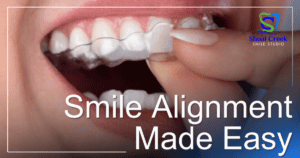
Can FSAs Pay for Invisalign®?
Absolutely! However, the cost of your Invisalign® treatment may be more than
your current FSA account balance. This will have much to do with your
dentist and their prices! The great news is that you can use the balance you
have to pay for most of the treatment, so your actual cost out of pocket
after compensation will be substantially lower.
Can I use My FSA to Pay for Dental Insurance?
Unfortunately, FSA money can only be used to reimburse expenses that have
been paid for out of pocket and not connected to insurance. This does
include payments for insurance premiums, co-pays, etc.
Can I have Dental Insurance and an FSA?
Of course! FSAs are a great way to receive treatments not covered by a
dental plan you might be interested in. If a particular program does catch
your eye but does not cover, say, Invisalign®, for example, you can still
get that plan and use your FSA to get that treatment! After using most of
your FSA on a particular treatment, what you have left to pay might feel
like a co-pay anyway!
Don’t Forget About Receipts!
Remember that you can only get reimbursement from your FSA with proof of
out-of-pocket payment! Don’t worry; the front desk of pretty much any
practice will be able to provide you with proof of purchase. However, to
make the process easier, it is always best to have everything in order
immediately—especially if things are getting down to the wire and you need
reimbursement before the deadline!
Contact Shoal Creek Smile Studio for any Questions on FSAs!
At Shoal Creek Smile Studio, we offer a range of dental services, all of which
FSAs can help pay for. We understand that figuring out situations with
insurance and benefits can be confusing and frustrating. Don’t wait on hold
only to get bounced from department to department! One call to our
experienced front desk team can help answer any questions!