A brighter smile can make a big difference, but should you choose professional whitening or at-home kits? Here’s what you need to know:
- Professional Whitening: Achieves up to 8 shades lighter in 1–2 hours. Costs $500–$1,000 per session. Dentist-supervised with stronger agents for faster, longer-lasting results.
- At-Home Whitening: Gradual improvement of 3–6 shades over weeks. Costs $10–$500 depending on the product. Lower peroxide levels and self-administered, with a higher risk of uneven results or sensitivity.
Quick Comparison:
| Factor | Professional Whitening | At-Home Whitening |
|---|---|---|
| Whitening Power | Up to 8 shades in 1 session | 3–6 shades over weeks |
| Cost | $500–$1,000 per session | $10–$500 |
| Time Commitment | 60–90 minutes per session | Daily use for weeks |
| Supervision | Dentist-monitored | Self-administered |
| Safety | Customized and safer | Risk of sensitivity/uneven results |
Choose professional whitening for quick, dramatic results or at-home options for affordability and convenience. Always consult your dentist to ensure the best choice for your teeth.
Results: Professional vs At-Home Methods
Dental Office Treatments
Professional whitening treatments use 25% hydrogen peroxide to lighten teeth by up to 8 shades in just 1–2 hours. This method delivers fast and noticeable results. The stronger agents used in dental offices penetrate deeper into the teeth, making the effects last longer. Dentists also use specialized tools to activate the whitening solution, ensuring even coverage and deeper effectiveness.
"At the dentist’s office, you may spend 1–2 hours but leave with teeth 8 shades whiter, whereas at home you will have to spend 1–2 hours per day over a series of days or weeks for your teeth to become 3–6 shades whiter." – General Dentist Ekta Desai, Dental Associates
With good oral hygiene and regular maintenance, the results from in-office whitening can last up to a year, depending on the level of staining.
Store-Bought Products
Store-bought whitening products take longer to show results, usually requiring daily use over several days or weeks to achieve a 3–6 shade improvement. While not as quick as professional treatments, studies show that consistent use of at-home products (like 10% carbamide peroxide applied for 8 hours daily over five days) can still produce noticeable changes, though more gradually. These products tend to work best on front teeth and may not be as effective on crooked or misaligned teeth.
"Professional teeth whitening is much more effective as it is implemented by a professional and will typically last longer." – Bright Side Dental
For those seeking a balance between convenience and results, dentists also offer take-home whitening trays. These provide effective results that can last 6–8 months with proper use. Regardless of the method chosen, maintaining good oral hygiene and avoiding stain-causing foods or drinks can help extend the benefits of whitening treatments.
Safety Factors
Dental Office Safety
Professional teeth whitening treatments are designed with safety in mind, using methods that protect both your teeth and gums. Dentists begin by conducting a thorough examination to ensure your teeth are suitable for whitening. During the procedure, they use whitening agents containing peroxide concentrations ranging from 15% to 43%. To protect sensitive gum tissue, dentists apply rubber sheets or gels and use custom-fitted trays to evenly distribute the whitening gel.
"The safest and most effective way to whiten teeth is through professional treatment at your dentist’s office." – Northside Dental Clinic
Home Use Safety
At-home whitening treatments differ from professional procedures in that they rely on the user to follow instructions carefully. These products generally have lower peroxide concentrations (3%–30%) compared to professional-grade options. While convenient, they come with specific risks.
Improper use of store-bought whitening products can lead to tooth sensitivity and gum irritation. One-size-fits-all solutions may not provide even coverage, potentially resulting in uneven whitening. Additionally, some DIY methods – like using activated charcoal – lack scientific support and might even damage your teeth.
To stay safe when whitening at home:
- Consult your dentist before starting any whitening treatment, especially if you have sensitivity issues.
- Carefully follow product instructions to avoid overuse or misuse.
- Stop immediately and reach out to your dentist if you notice unusual sensitivity or irritation.
"Seeing your local dentist for a whitening treatment is likely your safest option." – Dr. Mark Martindale, Martindale Family Dentistry
Price Breakdown
Dental Office Prices
Professional teeth whitening at a dental office typically costs between $500 and $1,000 per session, with an average price of $650. The cost depends on the method used:
- Zoom Whitening: $300–$500 (up to $1,000 for more extensive treatments)
- Opalescence Xtra Boost: $395–$500 per treatment
- KOR Whitening: $550–$1,200 per treatment
- Laser Whitening: $300–$1,200, depending on the complexity of the treatment
Keep in mind, dental insurance generally doesn’t cover cosmetic whitening treatments. Additional sessions or maintenance kits can add to the total cost. Each method offers a balance between upfront cost and long-term maintenance, so consider your goals when choosing.
Store Product Prices
At-home whitening products are more budget-friendly but require regular use to maintain results. Here’s a breakdown of common options:
| Product Type | Price Range |
|---|---|
| Whitening Strips | $10–$50 |
| Non-Custom Trays | $10–$30 |
| Custom-Fitted Trays | $100–$500 |
| Whitening Toothpaste | $3–$15 |
| LED Whitening Kits | $50–$500 |
While these options are affordable upfront, they often involve recurring costs since they need to be repurchased more frequently than professional treatments. It’s also important to note that over-the-counter products only work on natural teeth and won’t affect the color of crowns, veneers, or fillings. Understanding these price differences can help you find the right balance between cost and results.
sbb-itb-fb98d5c
Time and Scheduling
Dental Office Sessions
Professional teeth whitening can deliver noticeable results in just one session. These in-office treatments usually take 60–90 minutes, though some may last up to 2 hours.
"Teeth whitening done in the office is the quickest method to whiten teeth."
On the other hand, at-home whitening methods require daily applications over a longer period to see results.
Daily Home Use
At-home whitening involves applying the product daily for several weeks. While this approach takes longer to show improvements, it offers more flexibility for those with busy schedules. The table below highlights the key time differences between professional and at-home whitening options.
| Time Aspect | Professional Treatment | At-Home Method |
|---|---|---|
| Single Session Duration | 60–90 minutes | 1–2 hours daily |
| Total Treatment Time | One office visit | Several days to weeks |
| Results Timeline | Immediate (up to 8 shades) | Gradual (3–6 shades) |
| Maintenance Schedule | Occasional touch-ups | Daily application |
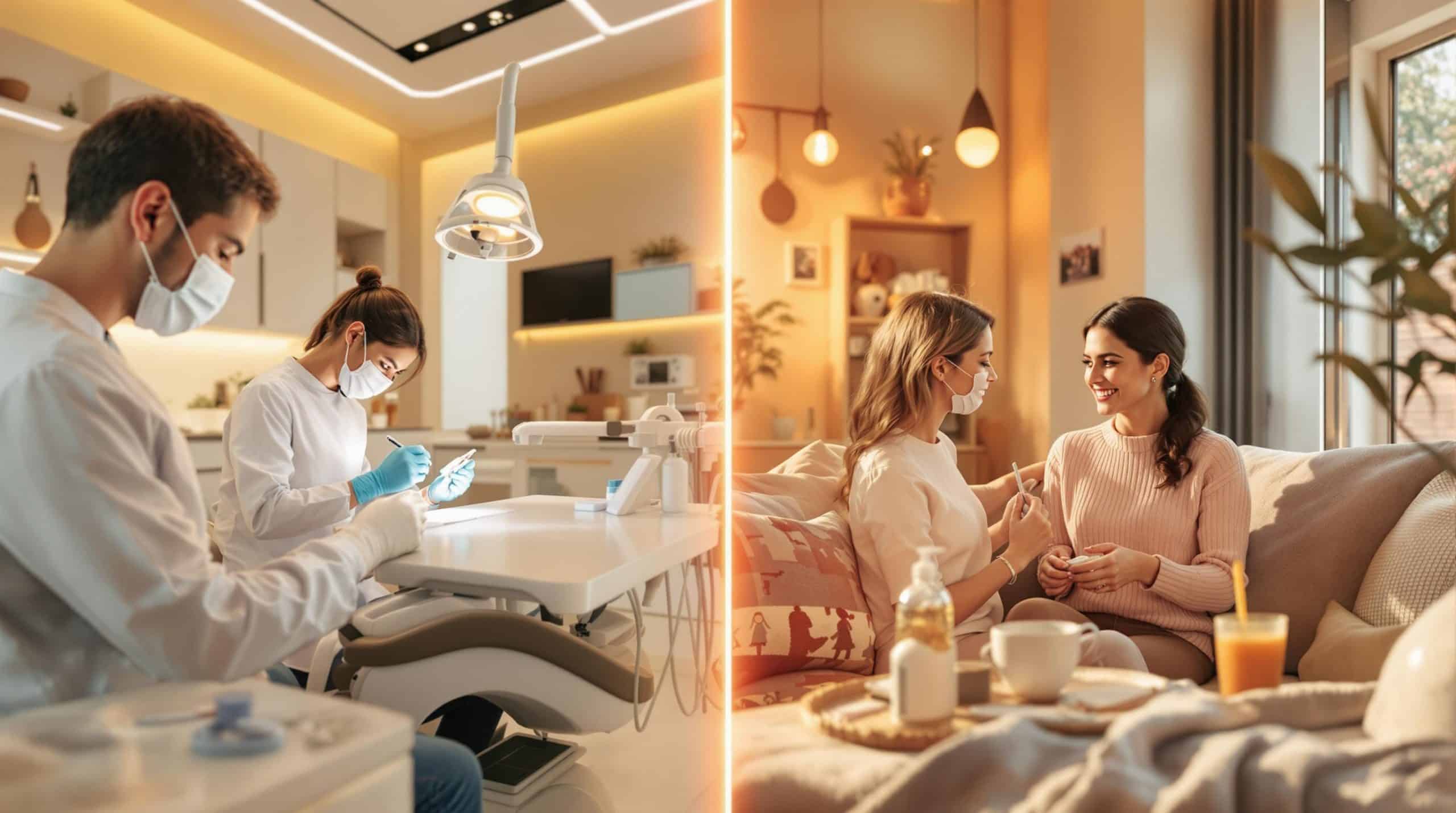
PRO VS STORE BOUGHT TEETH WHITENING – The Ultimate …
Method Comparison Chart
Let’s take a closer look at how professional and at-home whitening methods stack up against each other.
Quick Reference Table
Here’s a side-by-side comparison of key factors for professional and at-home whitening:
| Factor | Professional Whitening | At-Home Whitening |
|---|---|---|
| Whitening Power | Up to 8 shades lighter in one session | 3–6 shades lighter over weeks |
| Treatment Duration | 60–90 minutes per session | 30–60 minutes daily for 2+ weeks |
| Peroxide Concentration | 15–43% | 3–30% |
| Cost Range | $500–$1,000 per session | $10–$55 for OTC products |
| Results Timeline | Immediate results | Gradual improvement |
| Supervision | Dentist-monitored treatment | Self-administered |
| Customization | Tailored to individual needs | One-size-fits-all approach |
| Maintenance Needs | Occasional touch-ups | Regular ongoing treatment |
| Safety Features | Professional monitoring and customized plans | Risk of sensitivity and uneven results |
| Product Strength | Professional-grade whitening agents | Lower concentration formulas |
Conclusion
Each teeth whitening method comes with its own advantages. Choosing between professional treatments and at-home options largely depends on how quickly you want results, your budget, and the level of supervision you prefer.
Professional whitening can brighten teeth by up to 8 shades in just 60-90 minutes. While it’s more expensive, it offers faster and more consistent results under expert care. On the other hand, at-home options, which typically cost around $50, can improve teeth by 3-6 shades over several weeks. These methods use lower-strength ingredients and lack professional guidance, making the results less predictable.
"If you’re considering teeth whitening, be sure you know the facts about the process and what to expect. You should also check with your dental provider to make sure you’re a candidate for teeth whitening and to learn the best whitening method for your unique situation." – General Dentist Ekta Desai
For tailored advice and safe, effective results, consider booking a consultation with Dr. John Babineau or Dr. Lori Babineau at Shoal Creek Smile Studio. They can help you achieve a brighter, more confident smile.