Preventive dental care saves money and protects your oral health. For every $1 spent on prevention, you can save $8–$50 on costly treatments. Regular check-ups, cleanings, fluoride treatments, and sealants help avoid cavities, gum disease, and emergency dental visits. Sealants alone prevent up to 80% of cavities in children.
Key benefits of preventive care:
- Reduces long-term dental costs by up to 43%.
- Lowers medical expenses for conditions like diabetes by 12.25%.
- Improves overall health by reducing risks of heart disease and stroke.
Quick tips for prevention:
- Visit the dentist every 6 months.
- Brush twice daily, floss, and use fluoride toothpaste.
- Consider sealants for children and fluoride treatments for added protection.
Investing in preventive care not only keeps your smile healthy but also cuts down on expensive treatments later.
How Much Does Preventive Dental Care Cost? – The Pro Dentist
Key Elements of Preventive Dental Care
Preventive dental care plays a vital role in maintaining oral health and avoiding more serious dental issues down the line. Let’s break down the key components that contribute to a well-rounded preventive approach.
Check-Ups and Professional Cleanings
Regular dental visits are essential for spotting problems early, keeping teeth and gums healthy, and ensuring that any existing dental work remains in good condition. Professional cleanings go beyond what daily brushing and flossing can achieve by removing stubborn plaque and tartar buildup.
During these visits, you can expect:
- Early detection of cavities and gum disease
- Removal of plaque and tartar that brushing and flossing might miss
- Screenings for oral cancer and other health conditions
- Evaluation of bite and jaw alignment
- Monitoring and maintenance of existing dental work
Fluoride and Sealant Treatments
Fluoride treatments and dental sealants are effective tools in the fight against tooth decay. Studies show fluoride treatments reduce cavity risk by about 25%, while sealants can prevent up to 80% of cavities during the first two years and continue offering protection for up to four years.
For children aged 6–11, sealants are especially important. Kids without sealants are nearly three times more likely to develop cavities compared to those who have them. When fluoride and sealants are used together, they can provide an additional 14.5% reduction in cavity risk.
| Treatment Type | Cavity Prevention Rate | Duration of Protection |
|---|---|---|
| Fluoride Treatment | 25% reduction | 6 months |
| Dental Sealants | Up to 80% reduction | 2–4 years |
| Combined Approach | Additional 14.5% reduction | 2 years |
Oral Health Education
While professional treatments are essential, what you do at home is just as important. Educating patients about proper oral hygiene can lead to significant improvements in long-term dental health.
Key practices for at-home care include:
- Brushing twice a day with fluoride toothpaste
- Flossing daily to remove plaque and food debris
- Replacing your toothbrush every three months
- Using a fluoride mouthwash to strengthen enamel
- Eating a balanced diet rich in calcium and other nutrients
"Combining good at-home habits with regular dental check-ups is a winning strategy for maintaining a lifelong healthy smile." – Dr. Jason L. Downey, DDS
It’s worth noting that nearly half of adults over 30 show signs of gum disease. This highlights the importance of both professional care and diligent self-care in preventing oral health problems.
Integrating Prevention into Dental Treatment Plans
Custom Prevention Plans
Modern dental treatment plans prioritize prevention, tailoring strategies to suit each patient’s unique needs. This starts with a thorough assessment of factors like teeth, gums, jaw alignment, bite mechanics, and any relevant health conditions.
Several elements influence these personalized plans:
- Medical History: Conditions such as diabetes or heart disease require specialized attention.
- Risk Assessment: Factors like family history of dental issues, lifestyle habits, and current oral health status are carefully evaluated.
- Age-Specific Needs: Preventive care varies depending on the patient’s stage of life.
- Individual Goals: Treatment is guided by the patient’s preferences and desired outcomes.
These tailored prevention strategies form the backbone of advanced dental practices, such as those employed by Shoal Creek Smile Studio.
Shoal Creek Smile Studio‘s Prevention Methods
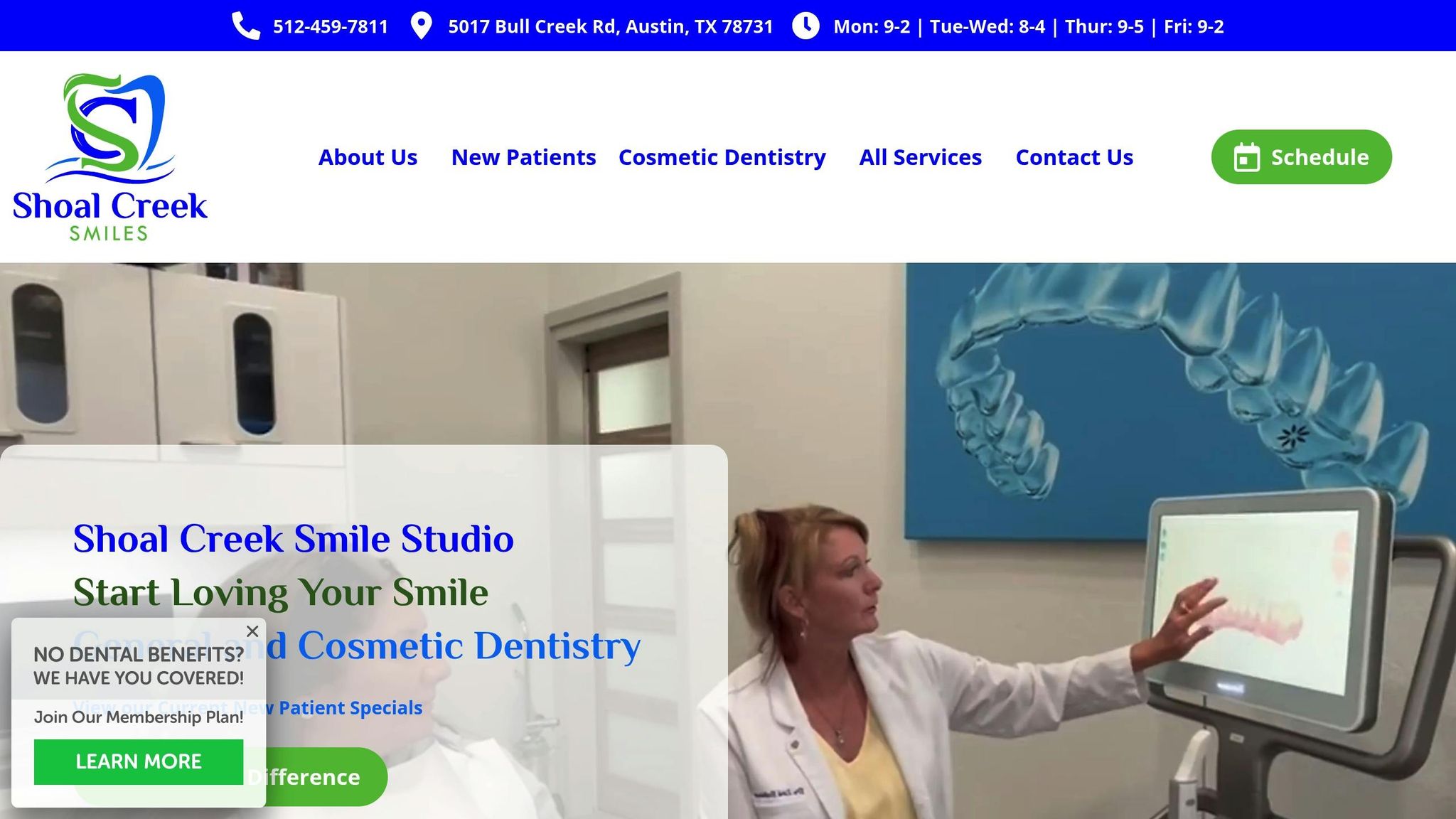
Shoal Creek Smile Studio takes a proactive approach to preventive care by combining advanced technology with detailed assessments. Using tools like digital imaging and intraoral cameras, they create highly detailed maps of each patient’s oral structure, allowing for precise and personalized prevention plans.
Their preventive care approach includes:
| Component | Purpose | Frequency |
|---|---|---|
| Digital Oral Scans | Early detection and monitoring | Every 6–12 months |
| Customized Cleaning | Tailored to individual risk factors | Every 3–6 months |
| Preventive Education | Personalized home care instructions | Every visit |
| Risk Assessment | Adjust prevention strategies as needed | Annually |
Despite 85% of Americans recognizing the importance of oral health for overall well-being, only 58% regularly visit the dentist. Shoal Creek Smile Studio addresses this gap by emphasizing patient education and offering customized care.
Their prevention plans include tailored home care routines, dietary guidance, personalized cleaning schedules, and focused treatments. Research supports this comprehensive approach, showing that early detection of dental issues can significantly minimize both the extent of treatment and the related costs.
sbb-itb-fb98d5c
Advantages of Preventive Care
Long-term Cost Reduction
Preventive dental care can lead to noticeable savings for patients over time. Research shows that for every dollar spent on preventive care, patients can save anywhere from $8 to $50 on restorative and emergency treatments. The financial difference becomes even more apparent when comparing the costs of routine maintenance to unexpected, urgent procedures.
For example, a study of Medicaid enrollees revealed that individuals who consistently received preventive care over five years reduced their dental costs by 43%. Their average yearly expenses were just $263, significantly lower than those who skipped preventive services. Additionally, patients without preventive care were found to be eight times more likely to need emergency dental treatments and seven times more likely to require oral surgery. These figures make a strong case for incorporating preventive care into regular dental routines.
Health Benefits
Preventive care doesn’t just save money – it also promotes better oral and overall health. Regular cleanings and check-ups help ward off tooth decay and gum disease while contributing to broader health improvements.
Some of the key health benefits include:
- Systemic Disease Prevention: Routine dental cleanings may lower the risk of serious conditions like heart disease, stroke, and dementia.
- Early Disease Detection: Preventive visits can catch serious issues, such as oral cancer, in their early stages.
- Chronic Condition Management: For individuals with conditions like diabetes or heart disease, consistent dental care can help reduce related complications.
Research also shows that adults who regularly use their dental benefits are more likely to receive tooth-saving treatments and avoid extractions. This not only improves oral health but also enhances overall quality of life. These findings underscore the importance of prevention as a cornerstone of effective dental care, a principle deeply embedded in the strategies employed at Shoal Creek Smile Studio.
New Developments in Preventive Dentistry
Preventive dentistry is stepping into a new era, blending traditional methods with cutting-edge technology to make early intervention more precise and convenient. With advanced tools and techniques, the focus is shifting toward catching problems earlier and providing more effective care.
Modern Prevention Tools
Technological advancements are reshaping how dental issues are detected and managed. For example, AI-powered imaging systems can now analyze dental scans and X-rays with remarkable accuracy, identifying early signs of trouble. One standout innovation is near-infrared transillumination, which detects cavities much earlier than traditional X-rays. To put it into perspective, conventional X-rays often miss cavities until about 30% of the enamel is already damaged. Dr. Gili Naveh from Tufts University sheds light on the importance of early detection:
"Every tooth that you drill into – the restoration that you make is never for life. It will eventually fail and you will need to replace it and make an even bigger restoration. If we can catch cavities earlier and prevent drilling, it will prolong the lifespan of our teeth."
Here are some of the latest tools making waves in preventive dentistry:
- Smart pH Monitoring: Devices like CaviSense toothpicks can detect acidic conditions harmful to tooth enamel. They change color from purple to yellow when the pH drops below 5.5, signaling potential enamel erosion.
- Bioactive Materials: Advanced fluoride treatments now incorporate nano-fluoride technology, paired with self-healing dental sealants to provide stronger protection against decay.
- Laser Technology: Precision lasers not only make procedures more comfortable and healing quicker, but they also help in spotting decay at its earliest stages.
These diagnostic tools are complemented by digital solutions that are redefining how patients interact with their dental care providers.
Virtual Dental Care
Virtual dental care is becoming a game-changer in preventive dentistry, offering convenience and accessibility like never before. Through remote consultations, digital imaging, and real-time treatment monitoring, patients can stay on top of their dental health without needing to visit a clinic.
Delta Dental of Washington emphasizes the value of virtual care:
"Virtual dental care has become a trusted and convenient way to access select professional dental services without stepping into a dental office…it’s an excellent solution for consultations and preventive care guidance when people just can’t get to the dentist because they don’t have a dentist nearby, are a person with a disability, are immobile for any reason, or just plain busy."
Smart devices are also playing a crucial role in this shift. For instance, smart toothbrushes now track brushing habits and send real-time data to dental professionals, enabling tailored advice for better oral hygiene. In March 2025, practices like DeJesus Dental Group began using automated tools such as chatbots and smart reminders to help patients stick to their preventive care routines.
These advancements are turning preventive dentistry into a proactive field, where problems are addressed before they escalate. By combining AI-powered diagnostics, innovative monitoring tools, and virtual care platforms, the dental industry is creating a more accessible and effective system for long-term oral health.
Conclusion
Investing in preventive dental care is not just about maintaining a healthy smile – it’s a smart financial decision too. For every dollar spent, you could save anywhere from $8 to $50 by addressing potential issues before they become costly problems.
At Shoal Creek Smile Studio in Austin, TX, preventive care takes center stage. Their approach combines thorough check-ups, professional cleanings, and patient education to promote long-term oral health. By blending traditional preventive techniques with cutting-edge technology, they can identify and manage potential dental concerns early on.
As the American Dental Association highlights:
"Preventive dentistry is an essential aspect of maintaining optimal oral health. Regular dental care not only enhances your smile but also ensures that you avoid complex procedures in the future. By focusing on prevention, you can save both time and money."
FAQs
How do fluoride treatments and dental sealants help prevent cavities?
Fluoride treatments help by reinforcing your tooth enamel, making it tougher and more resistant to decay. On the flip side, dental sealants serve as a protective layer applied to the deep grooves and crevices of your teeth. They act like a barrier, keeping bacteria and food particles from settling in those tricky-to-clean spots.
Together, fluoride and sealants create a strong defense against cavities. Fluoride strengthens your teeth from the inside, while sealants protect the outer surfaces that are most at risk. This one-two punch is especially effective for kids and teens, reducing the chances of tooth decay by safeguarding teeth both internally and externally.
How does preventive dental care help save money compared to emergency treatments?
Investing in preventive dental care is a smart move that can help you save money over time. Catching dental problems early – like treating a small cavity during a routine visit – can prevent the need for more expensive and invasive procedures later, such as root canals or extractions. It’s a simple way to avoid turning minor issues into major expenses.
But the benefits go beyond just saving money. Regular preventive care is also tied to better overall health. Research shows that keeping your oral health in check can lower medical costs because oral health is closely connected to your body’s overall well-being. By staying on top of preventive care, you’re not just protecting your teeth – you’re also reducing the chances of unexpected health issues and the stress that comes with them.
How does modern technology, like AI imaging and virtual dental care, improve preventive dentistry?
Modern advancements, like AI-powered imaging and virtual dental care, are reshaping preventive dentistry by improving early diagnosis and accessibility. AI imaging stands out for its ability to pinpoint early signs of dental issues, such as cavities or gum disease, with remarkable accuracy. This means dentists can catch and treat problems early, sparing patients from more invasive procedures and hefty bills. For instance, AI systems can scan X-rays to detect subtle changes that might go unnoticed by the human eye.
Virtual dental care is another game-changer, bringing preventive services closer to patients. Through remote consultations, individuals can connect with dental professionals for routine check-ups or follow-ups without leaving their homes. This added convenience motivates people to stay on top of their oral health, boosts patient involvement, and helps cut down on long-term dental costs. Together, these technologies are making preventive care smarter, more accessible, and easier for everyone.