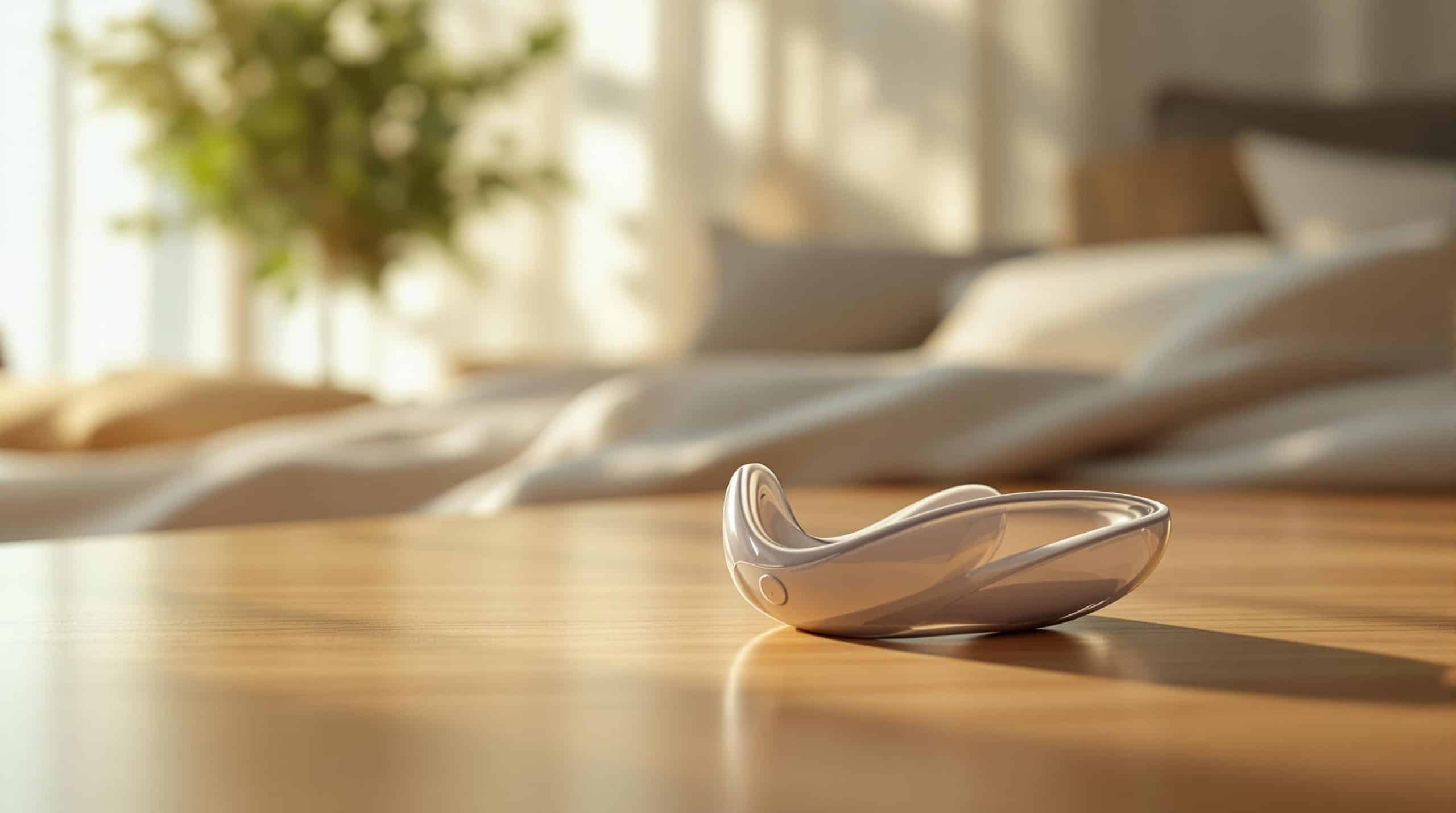
Struggling with sleep apnea? Oral appliances might be your solution. These small, custom-fitted devices keep your airway open during sleep, offering a quieter, more portable alternative to CPAP machines. Ideal for mild to moderate cases, they’re easy to use, require no electricity, and are now more effective thanks to advancements like 3D scanning and printing.
Key Features of Oral Appliances:
- Comfortable Fit: Custom-made using 3D scans for precision.
- Portable: Compact, lightweight, and travel-friendly.
- Easy Maintenance: Simple daily rinse – no filters or tubes.
Quick Comparison:
| Feature | Oral Appliances | CPAP Machines |
|---|---|---|
| Size | Small and portable | Larger and bulkier |
| Noise | Silent | Produces airflow noise |
| Power | None needed | Requires electricity |
| Maintenance | Quick rinse | Involves cleaning parts |
| Best For | Mild to moderate OSA | Severe OSA |
Oral appliances are a practical choice for many, offering comfort, convenience, and effective sleep apnea treatment. Consult a sleep dentist to see if this option is right for you.
flexTAP Oral Appliance for Sleep Apnea: How Does It Work?
New Developments in Oral Appliances
Recent progress includes the use of advanced materials, 3D scanning and printing, and features for precise adjustments.
3D Scanning and Printing
With 3D scanners, highly accurate oral measurements can be taken, ensuring devices are custom-made to fit perfectly and function efficiently. These designs can then be fine-tuned with precision adjustment features to improve comfort and airflow.
Oral Appliances vs. CPAP
Let’s break down how oral appliances compare to CPAP therapy, especially with the latest advancements in these devices.
Daily Use Experience
Oral appliances are compact, quiet, and don’t need electricity – making them easy to carry and perfect for travel. On the other hand, CPAP machines are larger, generate airflow noise, and require an outlet to function.
| Feature | Oral Appliances | CPAP Machines |
|---|---|---|
| Size | Small and portable | Larger and bulkier |
| Noise | Completely silent | Produces airflow noise |
| Power | No power needed | Requires an outlet |
| Travel | Fits in a small case | Needs power access |
| Maintenance | Simple daily rinse | Involves cleaning filters and tubes |
Treatment Success Rates
For individuals with mild to moderate OSA, oral appliances can achieve similar results to CPAP therapy, thanks to better long-term usage rates. Modern designs, crafted with advanced materials and precision 3D technology, improve comfort and encourage consistent nightly use.
Features Comparison
Oral appliances focus on comfort and simplicity. They’re custom-fitted, free of external parts, and still deliver effective therapy – making them a practical alternative for many people.
sbb-itb-fb98d5c
Patient Results and Benefits
Patients gain more than just comfort and ease of use – they see real improvements in their daily lives. The three standout benefits include better sleep, easy portability, and tailored care from professionals.
Improved Sleep Quality
Modern oral appliances help keep airways open, reduce snoring, and improve sleep for those with mild to moderate OSA.
Convenient for Travel and Daily Use
These devices are compact, lightweight, and don’t need electricity. They’re easy to pack in a travel case and only require a quick rinse each day.
Care from Sleep Dentists
Sleep dentists determine eligibility through sleep studies and oral exams, create custom-fit appliances using digital scans, and provide regular check-ins to ensure the fit is right and treatment stays effective.
Summary
With the help of modern materials, 3D scanning, and precision tools, creating custom oral appliances has become much easier and more accurate. Advances like digital imaging (including 3D scans, X-rays, and intraoral cameras) and precise 3D printing now allow for better-fitting devices that improve comfort and provide effective airway support. These innovations can help reduce snoring and improve breathing. Work with a sleep-trained dentist to review your sleep study and oral exam, and choose a custom-made appliance designed specifically for you.
FAQs
Is an oral appliance the right choice for treating my sleep apnea?
Determining if an oral appliance is the best treatment for your sleep apnea starts with consulting a dental professional. Oral appliances can be an effective and comfortable solution for many individuals, especially for mild to moderate cases or those who struggle with CPAP machines.
A dentist experienced in sleep apnea treatments can assess your condition, discuss your symptoms, and recommend the most suitable option based on your needs. If you’re exploring this treatment, consider reaching out to a trusted dental practice that prioritizes personalized care and advanced technology.
What happens during the process of getting a custom oral appliance for sleep apnea?
When you get a custom oral appliance for sleep apnea at Shoal Creek Smile Studio, the process is designed to prioritize your comfort and ensure effective results. First, the dental team will evaluate your condition using advanced diagnostic tools to determine the best treatment approach. Next, they’ll create a personalized oral appliance tailored to fit your mouth comfortably and help keep your airway open during sleep.
These appliances are crafted with precision to reduce snoring, improve breathing, and enhance your overall sleep quality. Throughout the process, the team at Shoal Creek Smile Studio is committed to providing attentive, personalized care to ensure the appliance meets your needs and supports your long-term health.
What are the possible side effects of using oral appliances for sleep apnea?
Oral appliances for sleep apnea are generally safe and effective, but they can sometimes cause minor side effects. These may include jaw discomfort, dry mouth, or excessive salivation, especially during the initial adjustment period.
In rare cases, long-term use might lead to changes in bite alignment or issues with the temporomandibular joint (TMJ). Regular follow-ups with your dentist can help minimize these risks and ensure the appliance fits comfortably and works effectively.