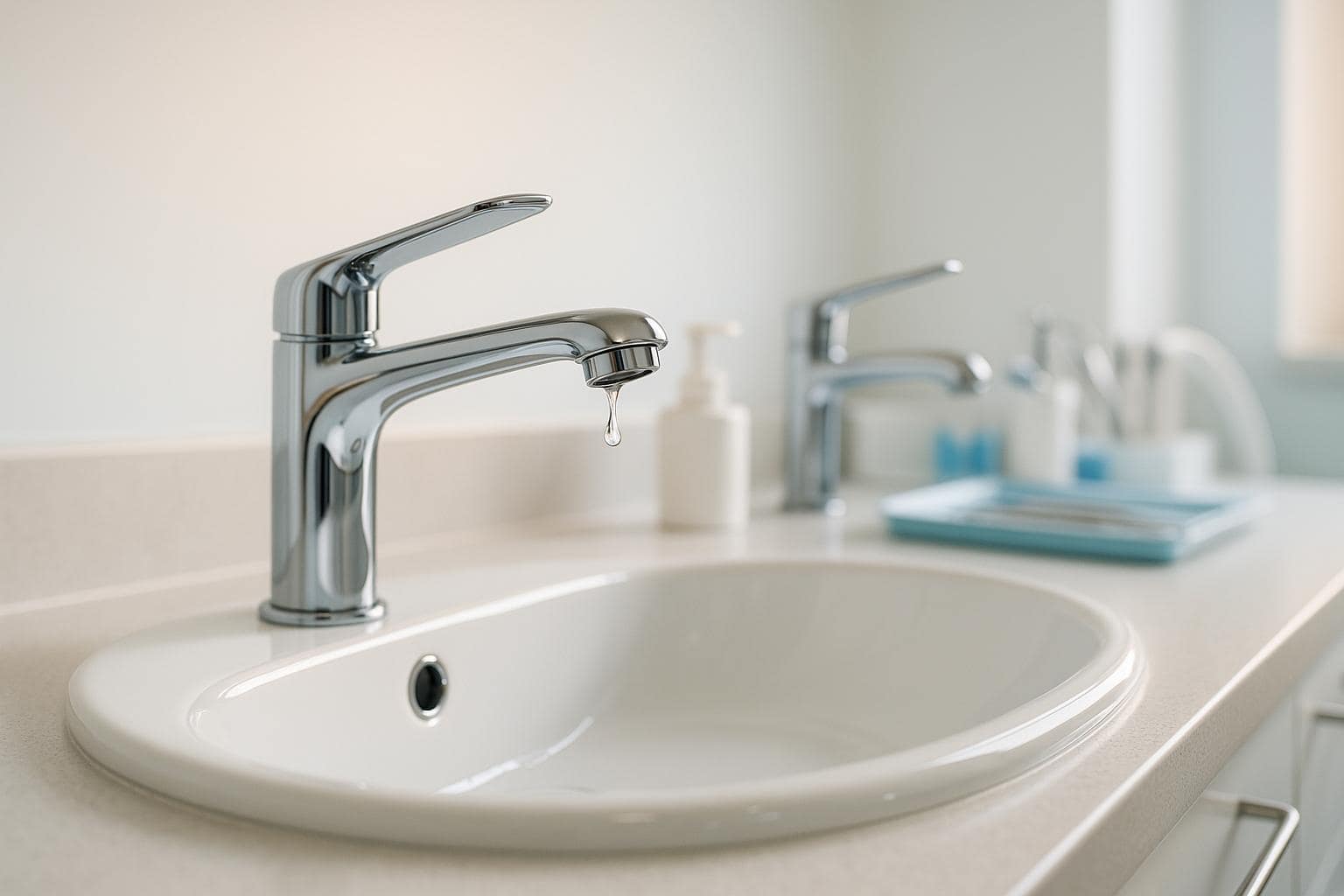
Dentists use much water – up to 360 gallons per seat each day. This raises costs, affects local water sources, and hurts the earth. By changing a bit, dental places can save water, cut bills, and pull in green-minded people.
Here’s how to begin:
- Check water use: Look for drips, old tools, and high water use.
- Make goals: Cut down on water each month by fixing drips, adding low-flow parts, and getting new tools.
- Get water-saving tech: Use dry vacuums, touch-free taps, and low-flow toilets to reduce use a lot.
- Switch daily habits: Turn off taps when not in use, clean tools in groups, and keep water lines running well to stop waste.
- Reuse water: Look into gray water setups for uses like flushing toilets.
- Deal with waste right: Put in separators to stop mercury in waste.
- Teach your team: Tell staff about saving water and push them to report drips or waste.
Check on progress and use money-back deals, like those from Austin Water, to help with costs and boost your work. Saving water is not only smart – it’s a great way to run your business while caring for the earth.
5 Essential Tips to Waterline Cleaning in Your Dental Office
Checking How Much Water You Use
Looking at how you use water can show you where you waste it and how to use less.
Doing a Water Audit
Start by getting 12 months of water bills. Check for high use that seems odd – these might mean leaks or broken gear. Watch your bills too, as water and sewer costs can go up fast.
Next, go through your place, from rooms to break areas, and see how water is used. Look close at dental tools like handpieces, ultrasonic cleaners, and sterilizers. Even tiny leaks can lead to big water waste over time.
Make sure to check your Dental Unit Water Lines (DUWLs) to keep bacteria under 500 CFU/mL as CDC says. Bad water can mean bad maintenance or bad water use.
Write down what you find. Keep an eye on faucets without aerators, tools using too much water, and other fix needs. This info will help you start to change things.
Here’s one story: In 2024, Dr. Mingus’s dental place in Bend, Oregon, looked deep into how they use water. They changed to saving faucets and updated their work steps, which cut their water use and saved money.
Use what you find to see where to get better and make clear goals.
Setting Clear Saving Goals
With your audit done, use the info to make clear, timed goals.
For example, you might plan to use 1,000 gallons less each month, switch all faucets to save more water in six months, or fix leaks in 30 days. Set goals that suit the issues and tools you spot.
Make sure your goals can be met and start with easy ones, like fixing leaks or putting aerators on faucets. After the simple fixes, go for bigger tasks like changing tools.
To keep on track, set up a way to check your progress each month. Look at your fresh water bills and your first data to spot new problems quick and see if you are saving water.
Using Water-Saving Tools and Fittings
Moving to new water-saving tech can really cut water use in dental places. Many spots say they get back their money in 1-3 years because they pay less in bills. Let’s look at the tools that help save this water.
Low-Flow Fittings and Sensor-Run Tech
Low-flow taps are built with things that mix air into the water, dropping flow to about 1.5 gallons a minute (gpm) from the usual 2.2 gpm. This easy change can use up to 60% less water, without a drop in how well it works.
Low-flow toilets are a big change too. They use 1.28 gallons per flush or even less, while old ones use between 3.5 and 5 gallons per flush. In a busy dental spot with lots of bathrooms, putting in low-flow toilets can save many gallons each month.
Sensor-run tech goes even further in water saving, by turning on taps only when needed. Taps that start with movement stop water loss from taps left running, which can waste up to 16 gallons a day. These are great for patient bathrooms and where staff works. The American Dental Association says sensor taps are key for green office steps. They need little care and keep saving water.
Water-Free Vacuum and Hand Tools
New dental tools also help use less water. Water-free vacuum systems are way better than old wet-ring vacuums, which need a lot of water to suck and cool. Air-run choices do the same job without water, saving heaps of gallons yearly and lessening bills.
Also, water-saving hand tools are made to use less water during teeth work. They still need some water to cool down, but they’re made to make less waste. Both water-free vacuums and saving hand tools cut a lot of water use in dental spots. These tools need a pro to put them in and some training for the team, but the good they do lasts in savings and being eco-friendly.
Regular Leak Checks and Upkeep
Even little leaks can lose many gallons each month, making regular checks key. In monthly checks, look at taps, toilets, and tool links for drips or bad valves. Watch the waterlines in dental units closely to make sure they don’t leak and meet CDC rules of 500 CFU/mL or less for bacteria. Bad water quality can show other problems that might waste water too.
Make a list for monthly checks and fix any problems fast. Even small leaks can add up. Get the team to tell if they hear odd sounds or see leaks in their day-to-day work to catch issues fast.
| Equipment Type | Water Savings | First Cost | Upkeep Needs |
|---|---|---|---|
| Low-flow taps | Up to 60% less water | Not too high | Now and then clean aerator |
| Sensor taps | Stops extra water from lost taps | More at start | Check sensors |
| Water-free vac systems | Saves lots of water each year | Big cost | Change filters often |
| Low-flow toilets | Saves 2–4 gallons each flush | Fair to high | Usual toilet care |
Good care is key to getting the most out of water-saving gear. Stick to what the maker says for clean-up and fixes, and make sure your team knows how to use these tools right. Doing this will keep things working well and make your gear last longer.
Making Dental Steps Use Less Water
Tiny changes in daily dentist work can help save a lot of water. By using smart ways, you can use less water and still keep your high care level and work well.
Changing How You Rinse and Clean Tools
Controlled rinsing is an easy way to cut down water use while taking care of patients. Rather than leaving the tap on, give patients a cup of water for rinsing. This small move could save up to 16 gallons of water per person each day.
When using tools like handpieces or scalers, get into the habit of turning off the water when you are not using them. Even short stops can use a lot of water during a busy day. Teaching your team to use water only when needed can help a lot.
Batch sterilization is another good step. Use the sterilizer only when it’s full. This saves water, cuts energy use, and makes your machines last longer.
For cleaning and drying, using compressed air helps a lot. It removes bits, dries areas after cleaning them, and takes out water from tools before you sterilize them. This is very useful when you need to keep things dry for certain treatments.
Big suction systems also reduce how much water you need to rinse during work, making things more efficient while saving water.
Also, keeping dental waterlines in top shape is important for using water well.
Keeping Dental Waterline Quality Good
Clean and safe dental waterlines matter a lot for both patient health and saving water. The CDC says that water in dentist tools should have fewer than 500 CFU/mL of some bacteria. Meeting this doesn’t require wasting water.
Systems that have their own water let you manage water quality and use better because they use treated water, not city water. These systems are made to be good with water.
Regular cleaning and checks stop bad layers from forming, which can make you need to flush a lot. A weekly clean using the right cleaners keeps your lines clear and cuts the need for sudden, big clean-ups.
Using chemical systems, like ones with tablets, keeps water good all the time. By testing water every month, you spot problems early and avoid wasting water from unexpected big cleanings.
Using Water Again and Handling Waste Water
Using water again and taking good care of waste water can cut down on your harm to the earth, cut costs in running your place, and show your true push for keeping the earth safe.
Putting In Water Using Systems Again
Systems that let you use water again can make it so you can use water that’s not for drinking for things like flushing the toilet or giving water to plants outside. For example, units that use gray water take water from the sink, clean it, and make it good for use in the toilet or for plants. Likewise, systems that use all water for things like dental tools put water back instead of tossing it after just one use.
Moving to dry vacuum setups is another big step, as these setups can keep a lot of water each day. This shows how good using water again can be for your work area.
Start by looking at how much water you use now to see where using water again could help. Then, talk to a good plumber to check if your setup can work with using water again. Pick a system that suits what your place needs and follows Austin’s rules for saving water. Some areas even give money back or help with costs to make it cheaper to start.
Even though it may be costly at first, the money saved on water bills makes it worth it in the end. Many systems pay for themselves in three to five years. To keep things running well, teach your team well on keeping the system working and to use it safely.
By fitting into Austin’s plan for saving water, you can use these plus points and help the city meet its goals to keep the earth safe.
Taking Care of Amalgam Waste
Along with using water again, it is key to manage waste well to lessen harm to the earth. Good handling of amalgam waste is very important to stop mercury pollution and meet rules. According to the EPA, one dental chair could let out up to 1.2 pounds of mercury each year if amalgam waste isn’t taken care of right. This mercury can spoil water paths, hurting fish and other water life.
Separators for amalgam play a big role here. These pieces catch mercury waste before it ends up in the water system. To keep in line, make sure these separators meet EPA rules and are kept up well. Choose a separator that fits the size of your place and look after it as the maker says.
Amalgam waste should be kept in bins that say what’s inside and never thrown out in the sink or with normal trash. Use services that are okayed to throw away risky waste to deal with this right. Keep clear records of how you collect, keep, and throw away this to stay right when checked.
Teaching your team is just as key. Everyone should know how to safely gather amalgam waste, change filters in separators, and deal with spills. Having training often can keep these methods in mind and stop any mistakes.
| System Type | Water Use Cut | Impact on World | Rules Followed |
|---|---|---|---|
| Old Wet Vacuum | Small | Uses lots of water/energy | Might not pass new rules |
| Dry Vacuum/No Water | Big (saves up to 360 gal/day) | Uses less water/energy | Passes or beats rules |
| No Mercury Catcher | None | Puts out lots of mercury | Does not follow rules |
| With Mercury Catcher | Big | Stops mercury harm | Follows rules |
To make sure your water reuse systems are safe and work well, test the water often. Test every month and keep good records to meet checks. Do usual care, like wash filters and look at tanks, to stop system breaks and make your gear last longer.
sbb-itb-fb98d5c
Teaching Staff and Creating a Water-Aware Mindset
Creating a water-aware culture starts with teaching your team about why saving water matters and bringing water-saving steps into daily work. It’s surprising that just about 10% of dental places in the U.S. use waterless tech, which could save a lot of water. This shows just how key it is to teach staff to make real changes.
It’s key for your team to know that saving water isn’t just about sticking to rules – it’s about really making a difference. When all work together, small steps by many can save a lot of water. This idea is the base for good training and regular talks.
Training and Involving Staff
Training should look at real, simple ways to save water every day. For instance, wet systems use 350–500 gallons each day, while dry systems use none. When team members see how much they could save, they’re more likely to welcome these steps.
Training also needs clear steps for using less water during work and the right ways to clean and rinse tools. Keeping good water quality in dental tools is key. CDC says water in dental processes should have less than 500 CFU/mL of certain bacteria to keep patients safe.
To make training more fun, let staff help set goals for saving water. When team members help to make these goals, they care more about meeting them. You could name a few as "water saving leaders" or start groups to lead these efforts. These leaders can find new ways to save water and keep everyone motivated.
Regular talks, like team meetings, can keep things moving. Use these times to talk about progress and cheer for wins, even small ones. Cheering on work done shows that even little steps add up to big impacts.
Let staff share what they see and ideas for saving water. Whether it’s a better way to clean tools or spotting a leak, every bit helps. These teaching steps add to bigger plans like getting better tools and making processes better.
Spreading Awareness With Signs
Teaching alone doesn’t cut it – clear signs can remind everyone daily to be water-wise. For instance, letting water run while brushing teeth can waste up to 4 gallons a minute, but turning off the tap can save as much as 200 gallons a month for each person. Simple signs by sinks telling staff to turn off the tap can make a big change.
Signs in restrooms, break rooms, and work areas can further help these steps stick. Use signs to remind staff to turn off taps, tell about leaks fast, and wash hands right. Sharing how these steps help the planet and save money shows why these actions are important.
Use simple words and clear pictures for strong results. Say things like "Turn off the tap while you soap your hands" or "Tell us about leaks right away" – these are easy to get and work well. Change what you talk about every month – one time it might be about telling when there’s a leak, another time it might be about how to save water when washing hands – to keep things new and fun.
If your place is in Austin, add info about local water rules and city-backed water-saving plans to your signs. This ties your work to the big group around you and shows you really care about helping out locally.
To see if your teachings and signs are doing well, look at water use numbers before and after you start. Ask your team every so often if they know and follow these ideas, and see how often they use the water-saving tips or report leaks. These stats will guide you to tweak your plans and keep getting better.
Keeping an Eye on Water Use and Getting Better Over Time
Saving water in a dental place is not a one-time job – it needs you to keep an eye on things to keep it right. Checking regularly helps you stay smart with water use, keeps everyone safe, and stops costly problems early. By watching your water use, you can stop wasting water and fix issues before they turn into big costs.
Regular Water Checks
Watching water quality is key in any dental place. As per CDC rules, water quality should be under 500 CFU/mL for patient safety and to meet rules. To do this, test your dental water lines (DUWLs) each month or every three months, based on local rules. You can use water testing kits or get pros to check bacteria levels.
Write down each test well – note the date, place, results, and any steps you took to fix things. If numbers go over the 500 CFU/mL mark, clean the lines right away, use the right cleaners, and test again until the levels are safe. Good records help your place keep up with safety steps.
Watching your water use is important too. Check your water meters often – weekly or monthly – to watch how much you use and spot any big changes that might show leaks or gear issues. Even a small leak can waste a lot of water over time.
Use digital tools to note meter numbers and look for signs of trouble, like leaks around taps, wet areas near pipes, or weird sounds from vacuum systems. For example, old-style wet ring vacuum systems can use up to 500 gallons of water each day. A little problem here can lead to a big waste, so finding issues early is key.
These regular checks help spot problems and track how well you are doing toward your water-saving aims.
Keeping Track of Your Goals
Once you’ve got a routine for checks, the next step is to watch your progress. This lets you see how well your saving steps are working and change things as needed.
Start by comparing your water use now to what it was when you started. For instance, if your place used 15,000 gallons last January but only 12,000 this January, you’ve cut down by 3,000 gallons – a 20% drop.
Set up a simple way to watch your water use each month, noting any gear updates or fixes you make. One dental place that switched to waterless vacuum systems saved more than 200,000 gallons of water every year. Programs like the Partners for a Clean Environment (PACE) Water Conservation Area of Excellence can help you keep to your goals.
Check your data every three months to see trends. You might find that water use goes up in the summer or that certain jobs use more water. These clues help you tweak your plans for even better results.
As your work grows, think about changes when more people come in. Even if things get done faster, you might use more water. To see this better, watch how much water you use for each person or job.
Keeping good records is key for staying in line with rules and getting better. Make sure you keep neat files of your water use, how you care for your gear, when you teach your team, and any new changes. These files make checks easy and show you what plans work best.
When you reach a big goal – like saving 50,000 gallons in a year – tell your team. Real wins push people more than just saying good job. They also make everyone feel proud to help reach the team’s goals.
Lastly, checking things often can help you plan your money for new stuff later. If some gear uses more water than you think it should, plan to swap it when things are slow. This avoids rush fixes and makes the most of your money in saving water. This step fits right with your bigger plans to keep things running well and caring for the planet.
Local Considerations for Austin, TX
Austin has made itself known for its smart ways to save water. It helps local places, like dental offices, cut costs while caring for the environment. The city has many plans to help these places use less water and find it easier to buy tech that saves water.
Austin Water gives money back for new items like toilets that use less water, taps that turn on by themselves, and systems that work without water – key parts for dental offices that want to use less water. These money-back offers help offices switch to new, greener tech without a big cost at the start.
Take systems that work without water as an example. They can save about 500 gallons of water each day compared to older systems. This big cut in water use not only reduces monthly bills but also lets offices get money back to help with the first costs.
Dental offices should talk to Austin Water or look at their website for the latest on money-back offers, who can get them, and how to apply. The city also has workshops to give real advice on money help and ways to use less water.
But getting new gear is just part of it. Dental offices also need to check water use often, keep water gear working well, and manage waste water right. They should follow water quality rules and handle waste safely.
Austin Water has seen great things from its money-back plans. Places that joined saw water bills drop by about 15% and saved lots of water every year. Groups like Austin Water, the Eco Dentistry Association, and local green programs offer help, teaching tools, and checklists to help offices through the money-back process and meet local rules. These plans help in getting things done and line up with the city’s bigger green goals.
Shoal Creek Smile Studio shows how dental places in Austin can care for water without giving up good care. This office has brought in tech that saves water and teaches its team to waste less. Besides what they do inside, they join local green programs, help patients know more about the environment, and join in events for the city – all while meeting Austin’s green standards.
Teaching the team is key. By helping staff learn the best ways, the clinic makes sure saving water stays steady without hurting how comfy or good patient care is. Their story shows that bringing in water-saving tech can happen slowly, but it leads to real good for the environment over time.
Austin’s focus on green living brings more than just money gains. Patients more and more like places that show they care for the environment. By joining city water-saving plans, dental places help meet the city’s long-term water goals and make better ties with patients who care about the environment. It’s good for both the city and the world.
Ending: Simple Tips for Saving Water
Cutting down on water use in dental offices not only saves money but also helps the earth and makes patients trust you more. Putting these perks together gives real worth to your clinic and the people it helps.
Changing wet ring vacuum setups for dry ones can keep over 200,000 gallons of water each year, and also cut down your bills. Adding things like low-use taps, touch-free faucets, and quick leak fixes grows savings and lifts profits by lowering what you spend each month.
Picking water-wise tech also shows your office cares a lot about the earth. Since dry systems are still not common, moving to save-focused tools can make your place stand out. Like, Studio Z Dental in Colorado did a water check and got dry pumps, using 77% less water than most. Such moves not only show you care about the planet but also help day-to-day work.
Patients see and like clear acts of caring for the planet. Showing actions like putting in smart gear or joining local save programs can build trust and bring in people who care about the earth.
Keep taking smart, planned steps. Start with a water check to find chances, then dive into big changes like dry vacuum systems, low-use taps, regular fixes, and teaching your team.
Lastly, keep an eye on your steps. Steady checks and clear goals make sure you’re doing it right and give you real results to talk about with your patients and locals. Being open about this shows you’re serious about real earth-saving changes.